Sunday, September 28, 2014

Emergence of Modernism

Emergence of Modernism
  • Clarity and force to achieve movement
  • De Stijl was the Dutch artists, sculptors, architects, and designers
    • Means the style
    • Expresses harmony and order
    • Abstraction and universality by reduction of essentials of form and color
    • Used primary colors and black and white
     
    People

    Frank Llyod Wright

    • Known for his use of Horizontal lines
    • Non-historical design
    • Original design
    • Organic Design
    • He created structures that complimented the landscape.
    • Japanese inspired designer
    • First major modern architect. Organic Architecture
    • His international career was kicked off by his work in the Imperial Hotel.
    • Known for Robie House
    • Known for 5757 S Woodlawn Ave Chicago, IL
    • Known for Unity Temple (875 Lake Street, Oak Park, IL) which is his only surviving public building from his prairie style
    • The Rookery (209 South LaSalle St. Chicago, IL)
    • Winslow House in River Forest, IL
    • Hickox house in Kankakee, IL was a prairie form house
    • Known for Larkin Compnay in Buffalo NY which included innovations such as air conditioning, stained glass windows, built-in desk furniture and suspended toilet bowls
    • Known for Avery Coonley which featured the first custom carpet scheme
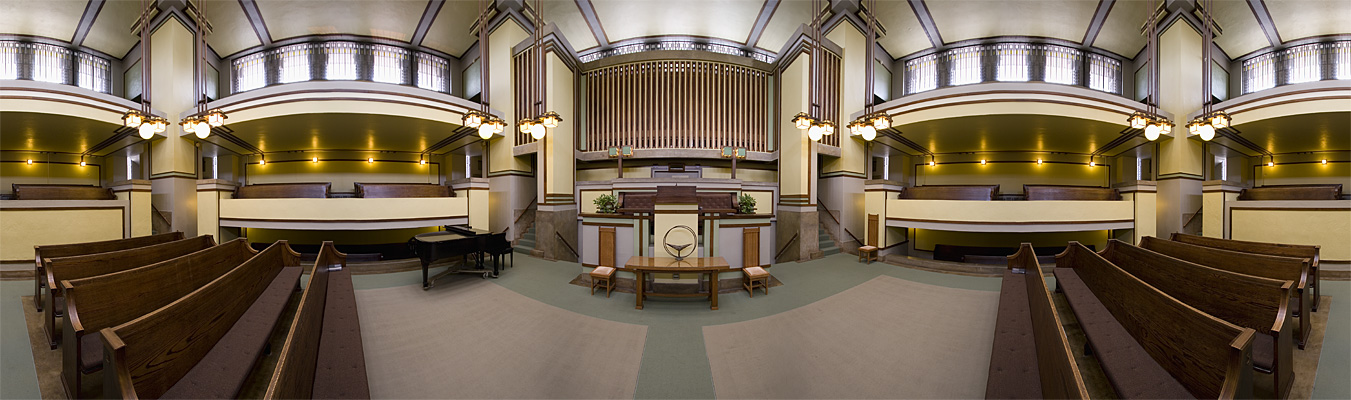
    Walter Gropius

    • Known for his lack of ornamentation, functional, industrial feel
    • Known for the Bauhaus
      • Bauhaus emerged fine art and applied art
      • It was forced to close is 1933 due to the war
      • Main teachers were Marcel Breuer and Wassily Kandisky

    Marcel Breuer

    • Created the Cesca chair
    • Created the Wassily chair

    Wassily Kandisky

    • Artist

    Miles Van Der Rohe

    • His motto was “Less is more”
    • Known for the Barcelona Exhibition of 1929
      • Bareclona Exhibition used steel and concrete
    • Known for the Tugendhat house in the Czech Republic
    • Relocated to America in 1937
    • One of the founders of the Illinois Institute of Technology in Chicago
      • He was the head of the architectural program

    • Known for the Farnsworth house in Plano, Illinois
    • Known for the Barsolona chair and stool
    • Known for the Brno chair

    Gerrit Rietveld

    • Known for the Schroder house in the Netherlands
    • Known for the Z chair


    I read Paige's blog, I really liked all the information she wrote on the period. She also wrote a lot of information on current applications of the period. She had a section on Frank Lloyd Wright that was very informational.
    I also read Rose's blog. I liked how many pictures she had I also liked how she included a picture of the emergence of modernism in fashion. It was a good idea to tie the two together.

    Current Applications


    Sunday, September 7, 2014

    Deutscher Werkbund Movement

    The deutscher werkbund movement was founded in Munich, Germany. It also affected Vienna, Austria and Berlin, Germany. Herman Muthesius was the founder. The goal of the movement was to produce the highest quality of mass production. The movement also strived to collaborate design teams and product manufacturers. Joseph Hoffman established the Vienna workshop. He also made the Morris chair, armloffel chair, kubus chair, palais stoclet chair, haus roller chair, club chair, circular fledermaus table, and the Koloman Moser. He worked on furniture, textiles and interiors. Gustav Klimt was very predominant in the Vienna period. He believed that there should be a union between art and design. He used fold paint often for dramatic effect. Otto Wagner was from Austria and he designed furniture to match his architecture. He was responsible for the Austrian Postal Savings Bank, and the postal savings bank armchair. He is also responsible for the Adolf loof.

     These chairs are an example of chairs that are used in the Deutscher Werkbund Movement.

    This table and chair set has the characteristics of the Deutscher Werkbund Movement style of furniture.

     This is a modern application of the Deutscher Werkbund Movement. The curved furniture and geometric surroundings are a signature of the style. The picture on the wall is also very characteristic of the style.

     The geometric style of this room is a modern application of the movement.
     
    I looked at Sammy's blog. I really like how detailed it was. She used a lot of pictures and described the people involved too.
    I also looked at Rachael's blog. I like how she described in detail all of the pictures she posted.

    http://vimeo.com/85705253 I found this video which shows details of the Vienna Secession building which was built by Joseph Olbrich in 1898.

    Friday, August 29, 2014

    Art Nouveau

    The Art Nouveau movement started was big in France and Belgium. Germany, Spain, Scandinavia, and the United States also participated in the movement. At the time, there was a lot of economic growth in Europe which supported new and experimental directions in design. Art Nouveau rejected traditional ways of design. Artists also showed an admiration for Japanese art. The style of Art Nouveau was strongly influenced by nature. There was a lot of steel and glass work. Some other characteristics include the use of electrical lighting and curvilinear forms (especially whiplash). Art Nouveau was also known as Jugendstil in some places.
     
    The people that mainly influenced the Art Nouveau movement were Victor Horta, Henery van de Velde, Hector Guimard, Antonio Gaudi, Louis Tiffany, and Louis Sullivan. Victor Horta was a Belgian architect and designer. He used conventional architectural motifs, unique iron railing, asymmetrical façade, twisted iron balconies, large glass window frames, and curvilinear nature related details. Henerty Van de Velde was also from Belgium. He designed furniture, silverware, and cookware. Hector Gulimand is well known for designing the Paris subway system.  Antonio Gaudi was known in Barcelona, Spain. He used flowing curves and unusual decorative detail. Louis Tiffany was known in the United States for his use of stained glass. Louis Sullivan was also known in the United States. He was known for his rich ornamentation. Some of his famous works include the Danmark Adler Auditorium Building, Charney House 1892, Transportation Building, and Carson Pirie Scott.


     This chair represents the Art Nouveau style. It has the curves and influence from nature that was common for this movement.


    These lamps are the Tiffany style lamps that were known in the United States at the time. They include stained glass and the design is influenced by nature.

    This family room represents a modern interpretation of the Art Nouveau movement. On the floor, the curved lines are typical of the style. The curves on the ceiling, walls, and down the fireplace also are typical of the style. The light fixture is also Art Nouveau style.

    This modern interpretation of the Art Nouveau movement includes the iron work on the staircase. The couches, chairs and coffee table have the curved lines. The chandelier is also very curvy. The plants in this picture are also a good nod to the Art Nouveau style.


    https://www.youtube.com/watch?v=eaIwdAErlKc  This video has a lot of detail and pictures from the Art Nouveau period. I really like how it included more than just interior design pictures. There were also pictures of the fashion, jewelry, furniture and paintings of the time. It really gives a good description of the time period and styles of the time through pictures. It also talks about the people famous for Art Nouveau styles.


    I read Natalie's blog. I really like how she showed pictures from the designer she is explaining. For example, when she mentioned Victor Horta, she showed a picture of the Horta House.

    I also read Justine's blog. I like how she categorized her blog in countries. She also put pictures for every country. There were a lot of pictures in her blog which made the blog more enjoyable to look at.
    

    Saturday, August 23, 2014

    Arts and Crafts Movement


    I learned that the arts and crafts movement was a reaction against the Victorian period. I also learned that the style was more minimalistic. An important thing I learned was the characteristics of the arts and crafts movement; The characteristics include visible wooden joists, pieces based on Gothic designs and influenced by shaker furniture, a lot of use of oak, simple and honest design, heavy furniture, clean lines, large exposed hinges, and good quality furniture. I also learned that designer Godwin incorporated Japanese style to furniture. Other designers such as Voysey combined Japanese and Gothic details. A subcategory created by Mackintosh featured furniture what had simple and geometric forms. He used extreme high back chairs, exaggerated proportions, new use of colors and exotic looking chairs.
      

    This chair has the extended arm rests. It also has a simple and clean design with the wooden frame which was typical of arts and crafts chairs.


    This table is bulky like most of the arts and crafts furniture. It is wooden and you can tell the craftsmanship put into making this table which makes it symbolic of the arts and crafts movement.

    This interior is a good application of the arts and crafts period because it has the bulky furniture of the time. It also has the wooden features that have good craftsmanship.
    This interior is a good application of the arts and crafts period because it has the wooden frame windows that have clean and simple lines. It also has bulky wood furniture which is typical of the arts and crafts period.
     
    This URL is to a YouTube video that does a good job explaining why the arts and crafts period happened. 
    https://www.youtube.com/watch?v=CBq73yxha0o
    I read Flor's blog. I really like how she got into certain designs of the arts and crafts period, such as the red house. I also liked how she wrote about the design patterns that she recognized Lily Pulitzer patterns as similar to the design of the arts and crafts period.

    I also read Ali's blog. I really like all the pictures she added in her blog. I also liked how she put a lot of information about the political history and what was going on in that time period.